


FOLLOW US


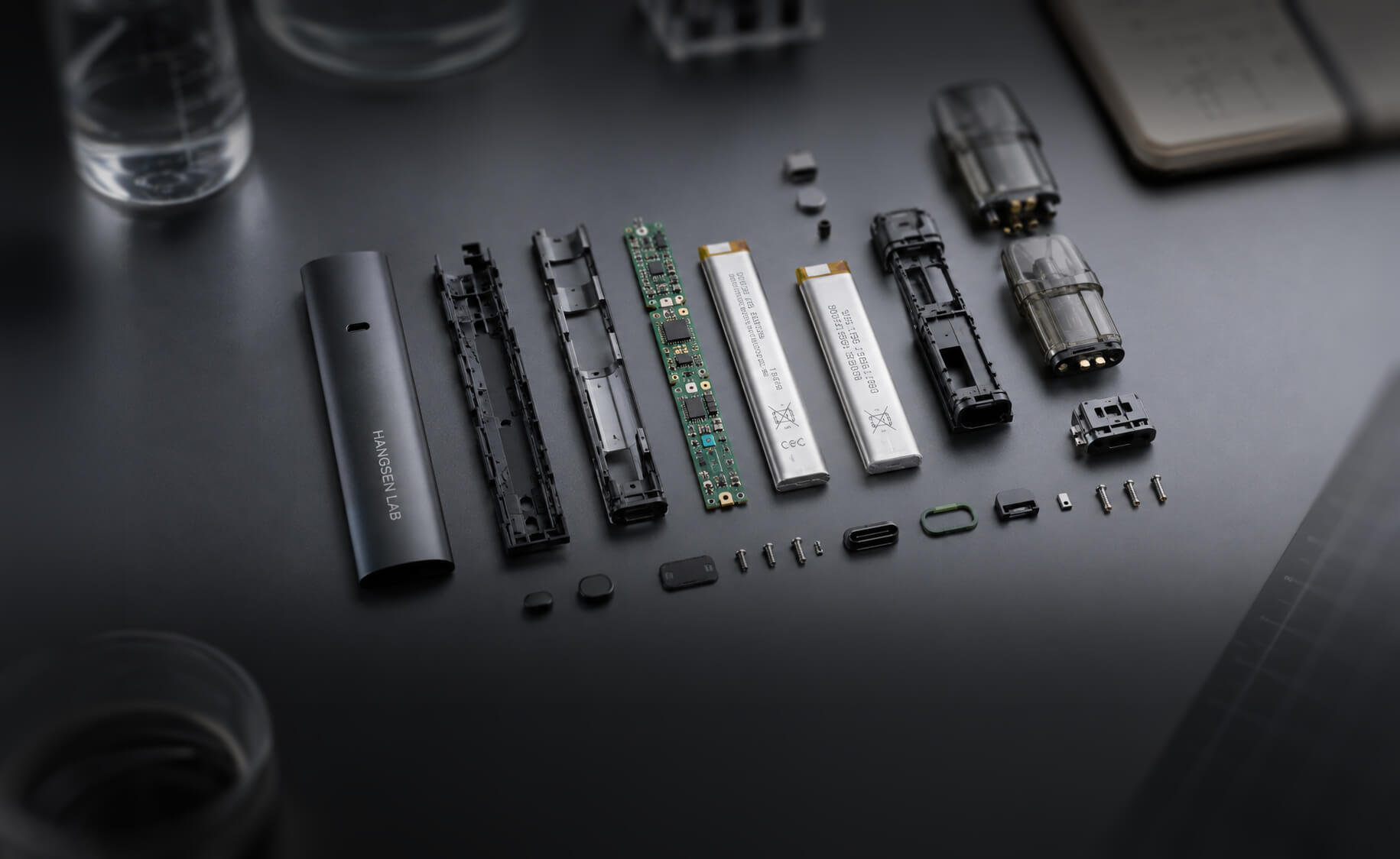
The same e-liquid may deliver a clear, well-defined flavor on one device, yet taste lighter, softer, or lose some of its original flavor depth when used on another. The formula itself has not changed. What changes is the way the e-liquid is heated, atomized, and ultimately delivered to the consumer as an aerosol.
Consumers do not experience the e-liquid in the bottle. They experience what the device ultimately delivers. The e-liquid formula defines the flavor foundation, while the device influences how those flavors are released and perceived. This is why the same formula does not necessarily produce the same final flavor experience across different devices. Understanding this relationship not only explains why a flavor can change from one device to another, but also affects how different vape products should be developed.
1. How Does a Device Change the Final Flavor of an E-Liquid?
From the moment e-liquid enters the atomization system to the point where it is heated, converted into aerosol, cooled, and inhaled, the device influences the entire process. It affects not only aerosol volume, but also how the liquid is heated and vaporized, as well as how the resulting aerosol is transported. As these conditions change, the relative release and perception of different flavor components can also change.
Heating characteristics, coil and wicking systems, airflow, and atomization structure are among the most direct factors.
Heating Characteristics Affect Flavor Release
Power is only one factor that determines atomization performance. Even when two devices have similar rated power, differences in heat-up speed, heating surface area, and actual power-delivery logic can produce very different heating conditions.
As a result, one device may make certain aroma notes more prominent, while another may suppress part of the flavor profile. Similar power specifications therefore do not necessarily mean similar atomization performance.
Coil and Wicking Systems Affect Performance Over Time
The atomization system not only determines how e-liquid reaches the heating area, but also affects whether liquid supply and heating remain stable during continued use.
Differences in heating structure, materials, and wicking efficiency can influence aerosol density, temperature, and flavor delivery. Some of these differences may not be obvious in the first few puffs, but can gradually appear as reduced aroma intensity, changes in flavor, or inconsistent performance over the course of use.
Airflow and Atomization Structure Affect the Overall Flavor Profile
Airflow affects more than draw resistance. The way air enters the heating area, together with the design of the atomization chamber, air path, and mouthpiece, can influence aerosol concentration, cooling, and delivery.
For this reason, changing devices does not simply make a flavor “stronger” or “weaker.” It can alter the relationship between aroma, sweetness, cooling sensation, throat hit, and overall aerosol body.
For example, an e-liquid may retain similar aroma intensity on a new device while other parts of the flavor profile change significantly. In another case, increased aerosol output may actually make the main flavor less distinct.
Consumers may simply describe these differences as “the flavor changed.” From an R&D perspective, however, increasing flavoring, sweetener, or cooling agents may only bring the initial trial closer to the desired result while masking the real issue and further altering the original flavor profile. In device-related projects, the first step should therefore be to determine whether the deviation comes from the formula, the device, or the interaction between the two.
2. Different Products Require Different Device Compatibility Strategies
Bottled e-liquids are used across a wide range of devices and operating conditions, while prefilled products such as disposable vapes and closed-system pods are delivered as a fixed combination of e-liquid and hardware.
Because the device environment is fundamentally different, the development priorities are also different. Bottled e-liquids require broader device compatibility, while prefilled products can be optimized much more precisely around a defined target device.
Bottled E-Liquid: Broader Device Compatibility Matters
Consumers may use bottled e-liquid with different power levels, coils, atomizers, and device types. Commercial development therefore cannot focus only on achieving the best possible result on a single reference device. The formula also needs to maintain its intended flavor performance as device conditions change.
An e-liquid can be optimized to perform exceptionally well on one particular device. But if that performance depends heavily on a narrow set of atomization conditions, the original flavor profile may change quickly when the device changes.
This may also explain why some e-liquids that have remained successful for years are not necessarily the most impressive on the very first try, yet continue to perform well in the market and build a stable reputation over time. Their success is often attributed mainly to flavor itself, while broader device compatibility may actually be one of the less visible foundations behind long-term brand performance.
Prefilled Products: Precise Optimization Around the Target Device
Prefilled products such as disposable vapes and closed-system pods follow a different development logic. Because the final hardware is already defined, development does not need to pursue the widest possible compatibility. Instead, the e-liquid can be optimized in greater depth around the actual atomization performance of the target device.
This requires the R&D team to understand the hardware in much greater detail. Basic parameters such as power and resistance are not enough. The team also needs to understand the device structure, operating logic, and actual aerosol performance.
Even when two devices have nearly identical headline specifications, their real-world vaping performance can still differ significantly. The deeper the understanding of the target hardware, the more precisely the e-liquid formula can be optimized.
As disposable and other prefilled vape products have expanded, e-liquid development has increasingly shifted from relatively independent flavor formulation toward closer collaboration between e-liquid R&D teams and hardware product engineers. Both sides test the device together and adjust the e-liquid formula and hardware parameters based on actual atomization performance, enabling more precise product optimization.
3. Different E-Liquid Manufacturers Follow Different Technical Routes
Different e-liquid manufacturers have developed different areas of technical strength. Many European manufacturers have focused on bottled e-liquids for years and built strong expertise in flavor development and open-system products. Chinese manufacturers, supported by a highly developed vape industry supply chain, have built stronger capabilities in the joint development of e-liquid and hardware for prefilled products such as disposable vapes and closed-system pods.
Hangsen has been developing bottled e-liquids since 2008, with products sold across global markets, and has established a strong technical foundation in bottled e-liquid development. In 2018, as prefilled and disposable vape products began to expand rapidly, Hangsen was also among the early manufacturers to enter this new technical field, working with leading global vape brands to continuously improve how e-liquids perform in devices.
After 18 years of continuous development, Hangsen has established mature R&D capabilities across both bottled e-liquids and prefilled products, making it one of the few e-liquid manufacturers with broad technical coverage in e-liquid–device compatibility.
If you are working to improve how the same e-liquid performs across different devices, expand the device compatibility of a bottled e-liquid, or further optimize e-liquid performance for a specific device, contact Hangsen at [email protected] to discuss your project with our product and R&D teams.

 Previous