


FOLLOW US



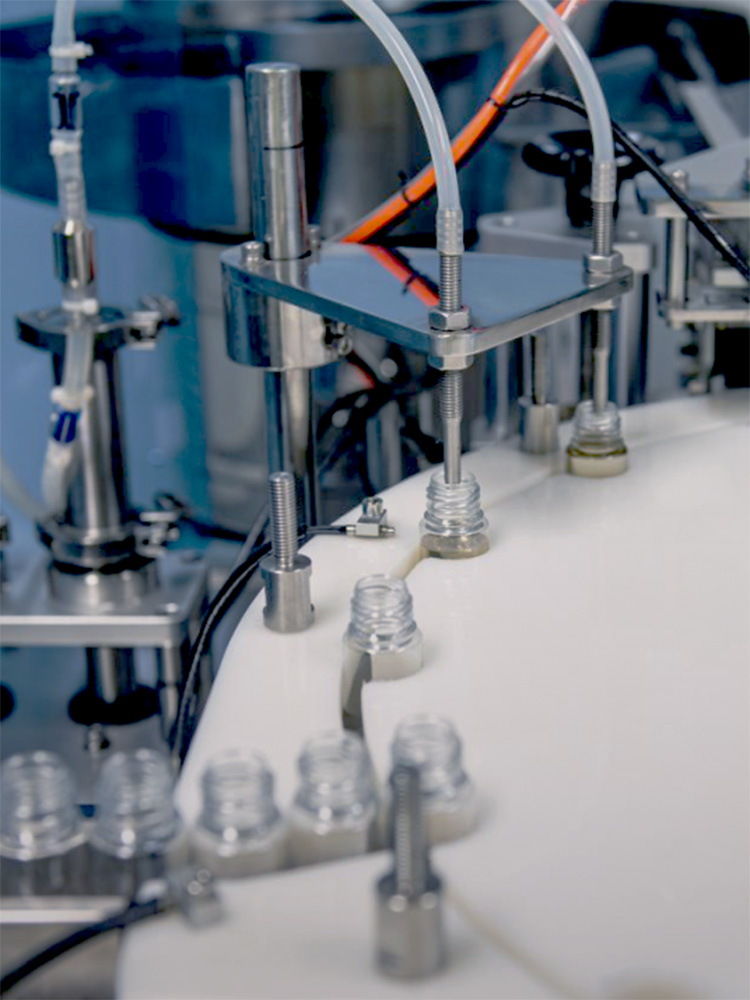
Choosing an e-liquid manufacturer involves more than comparing flavors, quotations and minimum order quantities.
A supplier may provide an impressive sample but still lack the systems required for consistent mass production, product validation, regulatory support or reliable repeat delivery. These weaknesses often become visible only after a brand has already invested in registration, packaging and distribution.
An effective supplier audit should therefore go beyond certificates and company presentations. It should use actual facilities, development projects, production batches and testing records to verify whether the supplier’s capabilities are genuine, controlled and consistently maintained.
This 12-point checklist can be used to evaluate suppliers of:
• Finished bottled e-liquids
• White-label or private-label products
• Custom e-liquid formulations
• Bulk E-Liquid
• Flavor Base solutions
• Prefilled pod and disposable vape projects
Audit priorities vary according to the product and cooperation model. Before evaluating a supplier, clarify:
• Target country or region
• Product and device type
• Nicotine type and strength
• Expected order volume
• Target launch date
• Party responsible for product registration
• Required testing and technical documentation
Identifying the actual manufacturer is the first requirement of a supplier audit.
The buyer should confirm which company develops, manufactures, tests and releases the product, and whether that company is legally qualified to manufacture the relevant product category.
Otherwise, the quality certificates, test reports, production records and delivery commitments reviewed during the audit may not belong to the company actually producing the goods.
A supplier may operate through a sales company, trading company or brand-management company. This structure is not automatically a risk. However, the relationship between the contracting party and the actual manufacturer must be transparent, and responsibility for quality investigations, recalls, returns and compensation should be clearly defined.
Production-licensing requirements differ between countries and regions. For example, when sourcing e-liquids manufactured in China, the buyer should verify that the actual manufacturer holds the applicable production licence and that its approved scope covers e-liquid or atomized-substance production and the relevant business activities.
• Actual manufacturer and production address
• Applicable production licence, validity and approved scope
• Relationship between the contracting party and actual manufacturer
• Parties responsible for development, production, testing and product release
• Any outsourced manufacturing or undisclosed third-party involvement
• Responsibility for quality investigations, recalls and compensation
Cross-check the business licence, production licence, contracting entity, payment entity, management-system certificates, test reports and actual production address.
During an on-site or remote audit, confirm where the project product is manufactured, whether the equipment and process match the product type, and whether the contracting party can access the manufacturer’s production and quality records.
If the contracting party is not the actual manufacturer, the contract or quality agreement should clearly define:
• Actual production site
• Product acceptance criteria
• Restrictions on changing the manufacturing site
• Complaint-investigation responsibilities
• Recall responsibilities
• Return and compensation terms
• The company name, production address or licence scope does not match the actual factory
• The relationship between the contracting party, licence holder and manufacturer is unclear
• Undisclosed subcontracting, outsourcing or third-party production is identified
• Actual production activities exceed the approved licence scope
• The contract or quality agreement does not define the manufacturing site, site-change controls or quality responsibilities
If the supplier cannot demonstrate who manufactures the product, whether that company is properly qualified and who is accountable when problems occur, the supplier should not proceed to the next stage of evaluation.
ISO and other quality-management certificates can provide useful background, but they do not replace verification of actual processes.
The audit should confirm whether raw-material acceptance, production operations, equipment management, deviation handling and finished-product release are governed by clear requirements and supported by complete records.
• Document and formulation-version control
• Personnel training and authorization
• Production-process controls
• Equipment maintenance and calibration
• Non-conforming product management
• Deviation investigation
• Corrective and preventive actions
• Finished-product review and release
Select an actual production batch and review its manufacturing record, in-process checks, test results, release approval and any related deviation records.
Confirm that documented procedures match what happens on the production floor.
• Certificate addresses or scopes do not match actual operations
• Production records appear copied, incomplete or completed retrospectively
• Operators cannot explain critical process controls
• Deviations are not formally investigated
• Documented procedures differ significantly from actual practice
E-liquid consistency depends not only on whether incoming materials pass inspection, but also on how the manufacturer selects, evaluates and continuously manages its raw-material suppliers.
A mature manufacturer should maintain a complete system covering supplier approval, incoming-material control, ongoing supplier evaluation and change management.
Confirm whether the manufacturer:
• Maintains an approved-supplier list
• Evaluates supplier qualifications and quality capabilities
• Conducts sample testing or trial use for critical materials
• Establishes technical specifications and acceptance criteria for each material
Confirm whether:
• Material name, batch number, specification and Certificate of Analysis are checked on receipt
• Risk-based incoming testing is performed
• Quarantined, approved and rejected materials are clearly separated
• Opened materials retain their name, batch number, expiry date and status identification
• Nicotine and other controlled materials have additional safety requirements
Supplier management should continue after initial approval.
Manufacturers should periodically evaluate suppliers based on:
• Quality consistency
• Deviations and returns
• Documentation completeness
• Delivery performance
• Change-notification performance
• Effectiveness of corrective actions
Suppliers with repeated quality issues should be subject to re-evaluation, purchasing suspension or removal from the approved list.
When changing a supplier, material source or technical specification, the manufacturer should evaluate possible effects on:
• Physical and chemical properties
• Sensory performance
• Product stability
• Device compatibility
• Regulatory documentation
• Mass-production consistency
Additional laboratory trials, pilot production or customer approval may be required.
Select one critical raw material and review its complete control path:
Supplier approval → Technical specification → Incoming batch → Inspection and release → Storage status → Products using the material
• Critical materials have no defined supplier-approval criteria
• Suppliers with repeated deviations are not re-evaluated
• Materials in use do not match approved specifications
• Material status or batch identification is unclear
• Supplier or material changes are implemented without validation
• Only an SDS is available, with no batch-specific quality information
An internal laboratory is an important indicator of a manufacturer’s R&D, quality control, and product validation capabilities.
However, laboratory equipment alone does not demonstrate technical competence. The buyer should understand what testing is actually performed internally, what is outsourced to qualified third-party laboratories, and whether the overall testing system can support product development, batch release, product safety and target-market requirements.
Depending on the product and market, testing may cover routine quality control, formulation and stability validation, device compatibility, e-liquid composition, aerosol and emissions, and toxicological assessment. Supporting documents may include COAs, SDSs, stability or compatibility reports, emissions test reports, toxicological assessments and relevant regulatory documentation.
HANGSEN also operates an internal CNAS-accredited laboratory. CNAS accreditation is based on internationally recognized ISO/IEC 17025 competence requirements and provides independent recognition of a laboratory’s technical capability within its accredited scope. This strengthens the credibility and reliability of relevant test results and provides additional technical support for product development, quality control and product-safety validation.
• Actual laboratory scope: Which tests are performed internally and which are outsourced to qualified third-party laboratories
• Routine quality control: Raw-material verification, nicotine concentration, physical properties, batch consistency and product-release testing
• R&D and product validation: Formula stability, separation, precipitation or crystallization, compatibility and device-performance verification
• Product-safety testing: Relevant impurities, contaminants and restricted substances in the e-liquid, together with aerosol or emissions testing for nicotine delivery, carbonyls, metals, thermal degradation products and other substances where required
• Toxicological assessment: Whether appropriate toxicological information or assessments are available for ingredients, finished formulations and emissions according to product and market requirements
• Testing documentation: Availability of COAs, SDSs, stability or compatibility reports, emissions reports, toxicological assessments and relevant regulatory documents
• Traceability: Whether test results can be linked to specific products, formulations and production batches, and to the relevant device version where applicable
• Basic laboratory controls: Whether key instruments have valid calibration or status records and whether testing follows defined methods and acceptance criteria
Not every test needs to be performed internally or used as a routine release test for every batch. The testing plan should reflect the product risk, supply model, device configuration and requirements of the target market.
Select one actual product and review a small number of representative records, such as:
• A routine batch-release test and its corresponding COA
• A stability, compatibility or product-validation record
• An e-liquid composition, aerosol, emissions or other relevant safety test report
Cross-check whether:
• The report clearly identifies the product and production batch
• The formulation and relevant device version can be identified where applicable
• The test method and acceptance criteria are defined
• Internal laboratory records include instrument status, original results and result review
• Third-party reports can be traced to the samples actually submitted
• Laboratory equipment is displayed, but complete testing records cannot be provided
• The supplier cannot clearly explain which tests are performed internally and which are outsourced
• COAs or test reports cannot be traced to a specific product or production batch
• SDSs are presented as evidence that the finished product has passed safety testing
• Aerosol or emissions reports do not identify the tested e-liquid and device combination
• Toxicological documents contain only generic conclusions with no clear product relevance
• Key instruments lack valid calibration or status records
• Testing has no clearly defined methods or acceptance criteria
• Abnormal results are repeatedly retested without documented investigation
If a supplier cannot demonstrate what it actually tests, how the results are controlled and traced, and whether its testing system can support product quality, safety and regulatory requirements, the laboratory should not be considered a meaningful indicator of manufacturing capability.
A large flavor library does not necessarily indicate strong custom-development capability.
The real question is whether the supplier can translate a customer brief into defined sensory targets, formulation parameters, device-testing conditions and mass-production standards.
• Customer-requirement analysis
• Target-market and device assessment
• Sample-version management
• Evaluation of sweetness, cooling, aroma and mouthfeel
• Formula approval and locking
• Intellectual-property and confidentiality controls
Review an anonymized development project from the initial customer brief through sample creation, revision and final approval.
Confirm whether:
• Each sample round has a unique version
• Customer feedback is formally recorded
• The approved sample is linked to a specific R&D formula
• The final formula is transferred into the production system through a controlled process
• Custom development consists only of selecting an existing flavor code
• Sample rounds have no version records
• Customer feedback is not documented
• The final approved sample cannot be linked to a specific formula
• Formula ownership and confidentiality responsibilities are unclear
E-liquid performance should be evaluated under its intended device and use conditions. A formulation that performs well during initial flavor evaluation may behave differently after filling, storage, transportation and continued use.
The audit should confirm that the supplier has completed appropriate validation for the relevant product format and supply model.
• The customer’s target device, coil resistance and operating power
• Filling volume and post-filling conditioning time
• Leakage, dry hits, clogging and coil-life performance
• Flavor performance during continued use and near the end of device life
• Finished-device performance after high- and low-temperature exposure, storage and transportation
Bulk E-Liquid is typically supplied as a finished formulation to device manufacturers. The audit should focus on whether the e-liquid is suitable for the target hardware and the customer’s filling process.
• Compatibility between viscosity, wicking rate and device structure
• Filling volume, filling-process requirements and conditioning time
• Compatibility with tanks, seals and other contact materials
• Suitable device, coil and operating-parameter ranges
• Defined application and testing requirements for the device manufacturer
• Revalidation requirements when the device or filling conditions change
Bulk E-Liquid is typically supplied ready for filling into prefilled pods, disposable vapes or other device formats. Its suitability should therefore be evaluated together with the target device, filling process and expected storage conditions.
• Testing with the target device and coil
• Compatibility between viscosity, wicking rate and device structure
• Filling volume, conditioning time and filling-process requirements
• Compatibility with tanks, seals and other contact materials
• Leakage, dry hits, clogging, buildup and coil-life performance
• Flavor stability during continued use and near the end of device life
• Performance after storage, transportation and temperature exposure
For Flavor Base projects, fitness for intended use should be verified on the final e-liquid produced locally according to the defined formulation and SOP.
• Recommended addition ratio and target finished formula
• Specifications for locally sourced PG, VG, nicotine and other materials
• Addition sequence, mixing time and conditioning requirements
• Physicochemical, sensory and device-performance criteria for the final e-liquid
• Local laboratory trials and first commercial-batch validation
• Final device-compatibility verification
• Revalidation requirements when local materials, the final formulation or the target device change
• Testing does not use the customer’s target device or a suitable representative device
• Test records do not identify the device model, operating parameters or relevant test conditions
• Evaluation is limited to initial flavor performance, with no extended-use or end-of-device-life assessment
• Filling, conditioning, storage or transportation conditions are not adequately considered
• Test results have no defined acceptance criteria
• The final locally produced e-liquid is not fully validated in Flavor Base projects
• No local trial, first commercial-batch validation or revalidation is conducted when relevant conditions change
• Leakage, clogging, dry hits or burnt taste are attributed solely to the device without a documented investigation
A successful laboratory sample does not automatically mean that the formula is ready for commercial production.
During scale-up, batch size, mixing equipment, agitation efficiency and conditioning time may change. The supplier should therefore have controlled procedures for formula approval, pilot validation and transfer to mass production.
R&D formulas and production formulas may use different coding systems. The issue is not whether the codes are identical, but whether the relationship between them is clear, controlled and traceable.
• Mapping between R&D and production formulas
• Material names, codes and specifications
• Addition sequence
• Mixing time and critical process parameters
• Conditioning or maturation requirements
• Pilot-batch validation
• Finished-product release criteria
• Approved reference sample
Select one commercial product and compare:
• Customer-approved sample
• Corresponding R&D formula
• Production formula
• Pilot-batch record
• Current manufacturing record
• Finished-product test and sensory results
• The production formula cannot be traced back to the approved sample
• Formula transfer to production has no formal approval
• R&D and production codes have no documented mapping
• Laboratory samples move directly into large-scale production without validation
• Raw-material or process changes are implemented without revalidation
Simply asking whether a supplier has traceability usually produces a positive answer.
A more effective method is to select an actual finished-product batch and ask the supplier to demonstrate both backward and forward traceability.
The finished-product batch should be linked to:
• Production formula and version
• Raw-material batch numbers
• Production date and operators
• Critical production equipment
• In-process inspection records
• Testing and release results
• Packaging-material batches
Select one raw-material batch and confirm:
• Which products and production batches used it
• Current inventory status
• Which orders received related finished products
• Which products would need to be isolated if the material became suspect
• Finished products can only be traced to the production date
• Raw-material, production and testing records cannot be linked
• Packaging materials cannot be linked to finished-product batches
• The supplier cannot identify which orders were affected by a raw-material issue
• Physical labels do not match system records
Product compliance requirements vary by market and may affect formulation, nicotine specifications, testing, packaging, labeling and registration. Suppliers should identify these requirements early, provide product-specific documentation and clarify the responsibilities of the manufacturer, importer, brand owner and notifier.
For white-label projects, a portfolio of notified or registered products can reduce duplicated development, testing and compliance work, helping shorten time to market. In the UK, rebranding an already notified product generally does not require a duplicate notification, although substantial modifications may require a new one.
At Hangsen International Group, we maintain a portfolio of more than 1,000 TPD/TRPR-registered products, helping accelerate European and UK white-label projects. Our experienced compliance team and in-house-developed review system enable faster, more accurate assessments and support product compliance across multiple global markets.
• Target markets and applicable product requirements
• Ingredient, nicotine type, strength and formulation restrictions
• Product specifications, ingredient information and raw-material documentation
• Batch Certificates of Analysis and Safety Data Sheets
• Required product testing and third-party laboratory support
• Packaging, labeling, warning and volume requirements
• Documentation required for product registration or notification
• Availability of notified or registered white-label products for the target market
• Countries and current notification or registration status covered by each product
• Additional notification requirements after changes to branding, packaging, formulation or product specifications
• Responsibilities of the manufacturer, importer, brand owner and notifier
• Regulatory change monitoring and impact assessment
• Product and document updates following regulatory, formulation or material changes
Select one of the buyer’s target markets and ask the supplier to explain the main compliance requirements, required documentation, responsible parties and key stages from product development to market launch.
For white-label products, confirm the countries covered, current notification or registration status, responsible submitter and whether changes to the brand, packaging or product specifications would require an additional submission.
Confirm that the supplier can provide documentation corresponding to the specific product format, formulation and nicotine specification, rather than relying only on a generic document package.
• The supplier claims that one certificate or product standard applies to every market
• A product is described as TPD- or TRPR-registered without identifying the covered countries, specific product or current status
• Immediate white-label market entry is promised without assessing changes to the brand, packaging, formulation, specifications or responsible submitter
• Compliance is considered only after the formulation or packaging has been finalized
• Ingredient, nicotine, volume, packaging or labeling restrictions are not assessed for the target market
• The product is described as “compliant” without identifying the applicable country, product or regulatory basis
• Product names, formulations, specifications, test reports and technical documents cannot be linked
• Regulatory changes are not assessed for their impact on existing products, packaging or registration status
• Responsibilities of the manufacturer, importer, brand owner and notifier are unclear
Packaging, filling and delivery controls should reflect the actual supply model.
• Bottle, cap and seal compatibility
• Filling quantity
• Cap torque
• Leakage inspection
• Labels and batch codes
• Outer packaging and transportation protection
• Filling accuracy
• Post-filling conditioning time
• Tank or pod sealing
• Finished-product leakage inspection
• Traceability between e-liquid and device batches
• Performance after storage and transportation
• Compatibility of bulk-container materials
• Net weight or volume
• Sealing and tamper-evident controls
• Batch coding and label information
• Contamination controls during handling
• Leakage prevention and transportation conditions
• Customer receiving and downstream filling requirements
• Product labels and recommended mixing ratios
• Mixing SOPs and technical documentation
• Local raw-material specifications
• Packaging integrity and transportation conditions
• Support for local trials and first commercial production
• Consistency between technical documents and delivered batches
• Packaging materials are used without suitability verification
• Filling, sealing or labeling lacks defined inspection standards
• Product batch numbers cannot be linked to documents
• Transportation conditions do not match product characteristics
• Technical documentation does not match the delivered product
A supplier’s total production capacity is not necessarily the capacity available for a specific project.
The audit should consider order volume, raw-material lead times, production scheduling, testing time and packaging readiness to determine realistic delivery capability.
• Available capacity during normal and peak periods
• Minimum order quantities
• Trial and pilot-production capability
• Raw-material and packaging lead times
• Backup plans for critical equipment
• Supply-security plans for critical materials
• Scheduling capacity for initial and repeat orders
Ask the supplier to prepare a project schedule covering raw-material procurement, production, testing and shipment based on the expected order volume and launch date.
A single overall lead-time promise is not enough.
• Delivery dates are promised before confirming material and packaging availability
• Every urgent order is accepted without capacity review
• MOQ or lead times differ significantly from what was agreed before formula approval
• The supplier cannot explain how repeat orders will be scheduled
A supplier should not be evaluated only when projects run smoothly.
During the audit, review an anonymized past customer complaint, internal deviation or non-conforming-product case to determine whether the supplier can investigate and close quality issues effectively.
This does not mean creating an artificial complaint. It means reviewing an issue that has already occurred and been processed.
A complete case should include:
• Affected product and batch
• Retained-sample inspection
• Review of manufacturing and testing records
• Raw-material and packaging traceability
• Problem reproduction where applicable
• Root-cause analysis
• Corrective and preventive actions
• Effectiveness verification
• Final customer response or internal closure
• The issue is attributed to transportation or customer use without investigation
• Products are replaced without identifying the cause
• Every corrective action consists only of retraining employees
• The corresponding retained sample cannot be located
• The identified root cause does not logically support the corrective action
• Similar issues continue to occur
A reliable e-liquid manufacturer should provide more than flavor samples and a product quotation.
It should be able to demonstrate that:
• The actual manufacturer and quality responsibilities are clear
• Production qualifications cover the actual products and business activities
• Raw-material suppliers are continuously managed
• The internal laboratory supports product development and quality control
• Formulas can be transferred consistently from R&D to mass production
• Products are validated under their intended application conditions
• Raw materials, production and finished-product batches are traceable
• Quality issues are investigated and effectively closed
• The supply chain can support reliable repeat delivery
Depending on the project, brands may choose white-label products, custom formulations, Bulk E-Liquid or Flavor Base solutions.
Send your target market, product format, device parameters, nicotine specifications, expected order volume and launch plan to [email protected].
The Hangsen team will help evaluate the most suitable formulation-development, product-validation and manufacturing approach for your project, supporting its progress from concept development to commercial production.

 Previous