


FOLLOW US


In vape fruit flavor development, aroma release speed and the opening impression can directly influence how a product is first perceived. Even when the middle and later stages of a flavor are well structured, a weak or unclear opening may make the profile feel muted, blurred, or less appealing.
Ethyl Acetate is a highly volatile ester commonly used to improve brightness and clarity in fruit flavors. It helps fruit aromas become noticeable more quickly, making the opening of the flavor feel lighter, more direct, and easier to identify.
Compared with Ethyl Propionate, which is more associated with juiciness, ripe fruit character, and flavor continuity, Ethyl Acetate is better suited for aroma lift and front-end modification. In vape fruit flavor structure design, it is usually not used to add body or thickness, but to improve clarity, diffusion, and liveliness at the beginning of the flavor.
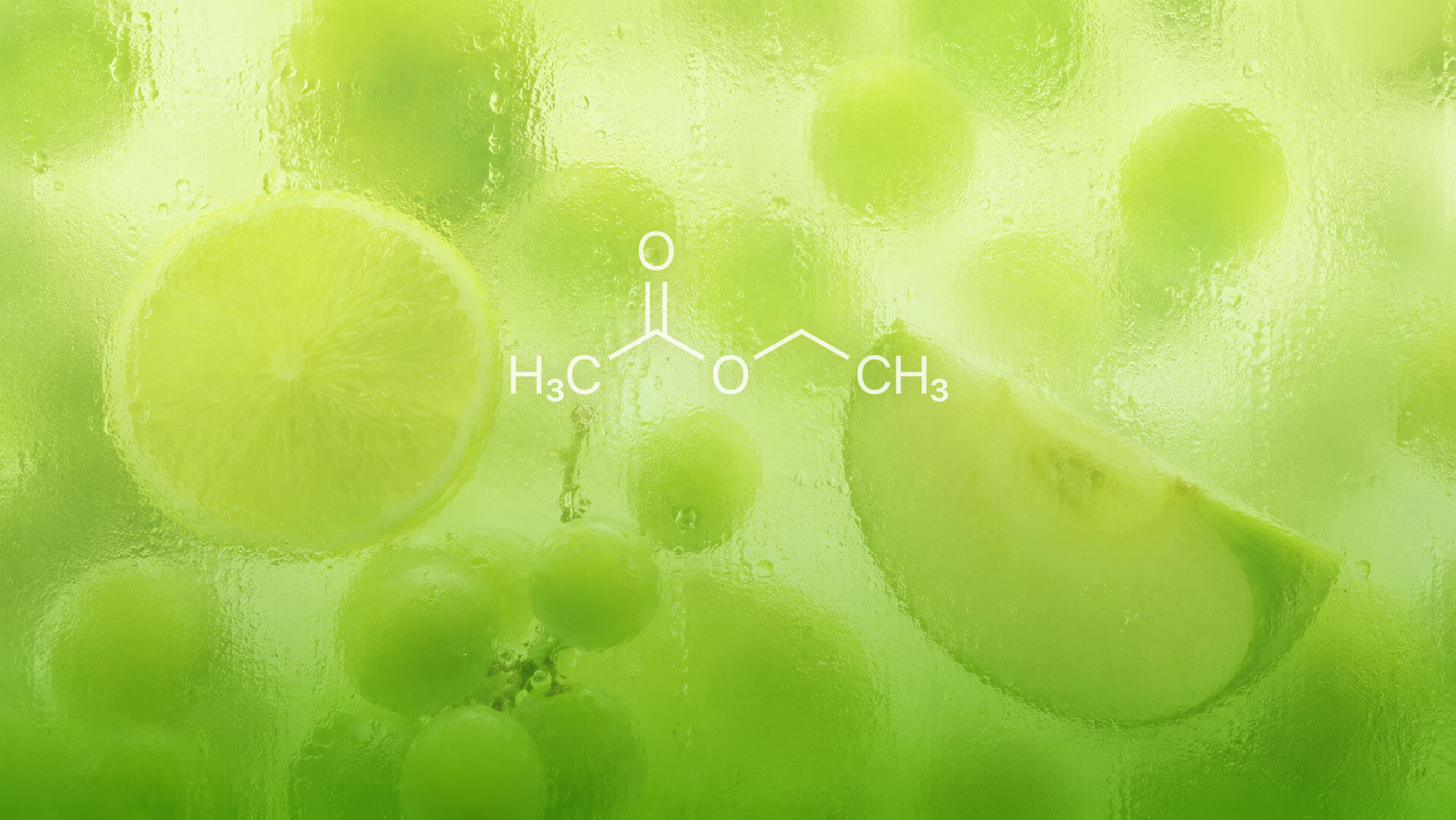
Ethyl Acetate, also known as acetic ether, has the structural formula CH₃COOCH₂CH₃. It is a common small-molecule ester naturally found in many fruits, wines, and fermented foods, with a light, diffusive, and short-lasting volatile aroma profile.
Ethyl Acetate and Ethyl Propionate differ structurally by only one methylene group (-CH₂-), but this small difference is enough to affect their volatility and sensory behavior. Ethyl Acetate has a boiling point of about 77°C, lower than Ethyl Propionate at about 99°C. As a result, it tends to release more quickly in the early stage of a flavor, creating a lighter and brighter aroma impression.
In flavor creation, Ethyl Acetate is often regarded as an important ester for shaping top notes. Its value does not lie in building a complete fruit body on its own, but in helping fruit flavors create a faster, brighter, and clearer opening.
Ethyl Acetate usually presents a light, sweet, and highly volatile fruity ester aroma. Depending on dosage, formulation environment, and interaction with other aroma components, it can enhance freshness, brightness, and recognizability in fruit flavors.
Common sensory characteristics include:
• Light, sweet fruity ester aroma
• Fresh fruit notes such as apple, pear, and grape
• Slight floral-like or fermented beverage-like associations
• At higher use levels, it is prone to showing a pungent volatile impression
It should be noted that Ethyl Acetate can enhance the front-end expression of fruit flavors at appropriate levels. However, when used excessively or without proper formulation control, it may also bring an overly sharp, pungent, or nail polish remover-like impression. Therefore, it is more suitable as an aroma modifier and front-end brightening component, rather than the core material that defines a complete fruit flavor.
In vape products, consumers usually form their first judgment of a flavor during the initial stage of inhalation. What is perceived first is often not the complete flavor structure, but the more volatile aroma components that release earlier. These components influence the clarity, brightness, and recognizability of the flavor opening.
With its high volatility, Ethyl Acetate can help fruit aromas release more quickly, making the opening feel lighter, brighter, and more direct. In fresh fruit directions such as apple, pear, and grape, as well as some mixed fruit profiles, Ethyl Acetate is often used to improve aroma transparency and entrance-stage recognizability, making the front-end flavor expression clearer.
In some fruit flavor formulations with a dull, heavy, or poorly defined opening, Ethyl Acetate can be used to improve aroma diffusion. Rather than simply increasing flavor intensity, it helps optimize early-stage aroma release, making the fruit character easier to perceive during the initial inhalation.
Ethyl Acetate is also commonly used in combination with other aroma components. Through the interaction of different materials, R&D teams can optimize the front-end aroma expression while helping it connect more naturally with the middle and later stages of the flavor structure.
In light fruit flavors such as apple, pear, and grape, Ethyl Acetate can help strengthen a clean and fresh fruit impression. It is suitable for highlighting the lightness and transparency of these fruit profiles, preventing the flavor from feeling heavy or blurred.
In this type of application, Ethyl Acetate is not responsible for adding pulpy texture or juice thickness. Its role is to make the fruit character feel clearer and brighter.
In Fruit Punch, mixed fruit beverages, refreshing juice flavors, and cooling beverage-style profiles, Ethyl Acetate can enhance aroma release during the initial stage, making the overall flavor feel lighter and easier to approach.
In these structures, it usually works together with sweetness, acidity, cooling sensation, and other fruit aroma elements to create a refreshing beverage-style opening, rather than acting as the full juice body on its own.
In multi-fruit profiles or combinations of fruit with beverage, candy, or cooling elements, Ethyl Acetate can help reduce a cloudy, sluggish, or poorly defined opening. It allows some lighter fruit elements to be recognized more quickly, making the beginning of the overall profile feel cleaner.
Although Ethyl Acetate can enhance aroma performance, flavor brightness, and first impression, excessive use may make the front-end aroma overly prominent or even create a sharp, pungent, or nail-polish-remover-like impression. Since Ethyl Acetate itself does not provide sustained fruit body support, overreliance on it may result in an opening that feels too aggressive, while the middle and later stages remain relatively thin, making the overall flavor structure feel unbalanced.
For this reason, Ethyl Acetate is usually used together with other aroma components in vape flavor design, and its expression is adjusted according to the target flavor type, aroma intensity, sweetness structure, and product positioning.
In practical applications, the use of Ethyl Acetate should also comply with applicable flavor ingredient standards, regulatory requirements, and product safety evaluation guidelines in the target market. Since flavor ingredients may behave differently under aerosolization than in food or beverage applications, thermal stability, aerosol emission performance, and overall formulation safety should also be evaluated during vape product development.
The core value of Ethyl Acetate lies in improving the opening expression of fruit flavors, making the aroma feel lighter, brighter, and easier to perceive. It is suitable as a front-end aroma modifier, rather than as the source of a complete fruit body.
In vape flavor development, Ethyl Acetate should be applied according to the target flavor direction and product positioning, avoiding excessive use that may cause front-end over-impact, pungency, or an unbalanced flavor structure.
ABOUT HANGSEN
Hangsen is one of the largest global e-liquid manufacturers. Since we were the first to establish the industry’s manufacturing standards and to introduce VG+PG as the base liquid for e-liquids, our business has expanded to over 80 countries and regions worldwide. The world’s top e-cigarette brands and tobacco enterprises are our loyal clients. Each year, we provide over 60,000 high-quality flavor formulations to hundreds of companies. Innovation, efficiency, safety, and stability are the cornerstones of our ongoing pursuit.
For inquiries about e-liquid OEM/ODM services, please get in touch with us at [email protected].

 Previous
